WELCOME THE LAUREL SCHOOL TODDLER, PRESCHOOL & PRE-KINDERGARTEN VIRTUAL CLASSROOMS
  • Welcome
  • Toddler
    • Ms. Naomi & Ms. Haley
    • Ms. Margo & Ms. Tonia
  • Preschool
    • Ms. Rachel
    • Ms. Julia
    • Ms. Taisha
    • Ms. Amanda
    • You Tube Stories & Songs
  • Pre-Kindergarten
    • Ms. Lynn
    • Ms. Nancy
  • Ms. Sunny's Corner
  • Student & Family Shares!
  • Contact

Ms. amanda's home learning resources

​

canvas art

4/13/2020

0 Comments

 
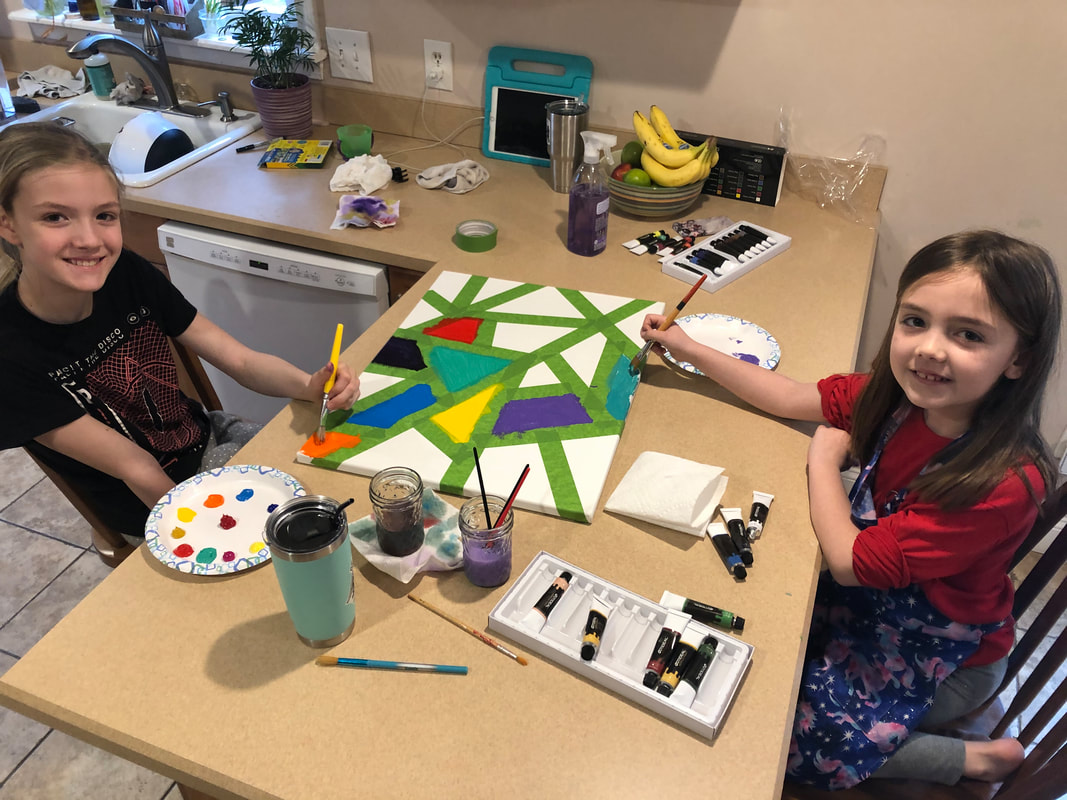
Are you interested in painting and colors! If so this project is for you! In this lesson you will be painting with multiple colors.

What is our theme? Colors Colors Everywhere!!

What is the lesson (overall purpose)?  To become familiar with all the colors around us. And to experiment with different media such as paint.

MA Guidelines/Standards:
APL 1: The child will demonstrate initiative, self-direction, and independence.
APL 2: The child will demonstrate eagerness and curiosity as a learner.

Learning Outcomes:
Children demonstrate that they are developing engagement and persistence in a growing capacity to maintain concentration over time on a task (or question, interaction, set of directions, etc.) despite distractions and interruptions.

Songs, Books & Videos (Motivational Techniques)
Mouse Paint - by Ellen Stoll Walsh - Story Read Aloud posted below

Materials:
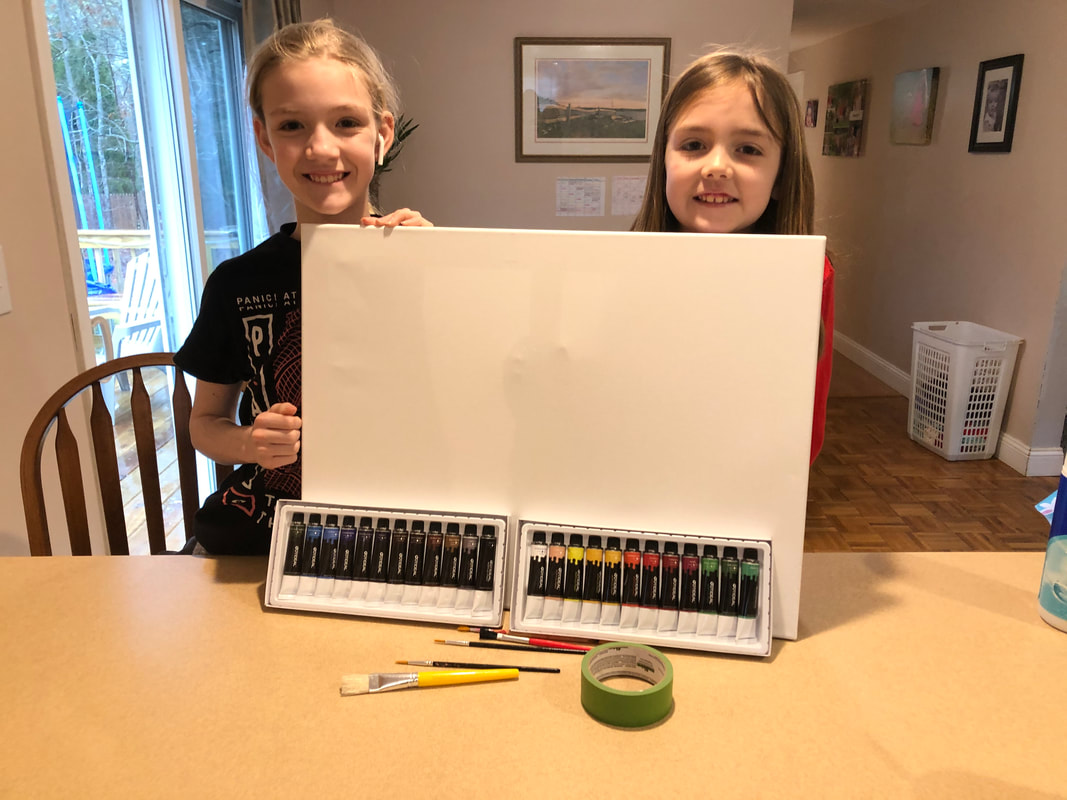
smock or large shirt you don't mind getting paint on
Canvas/ heavy duty paper
acrylic paint
painters tape or brown tape
paint brush
water cup (to clean paint brush) 
towel (to dry paint brush)

Activity (Procedure):
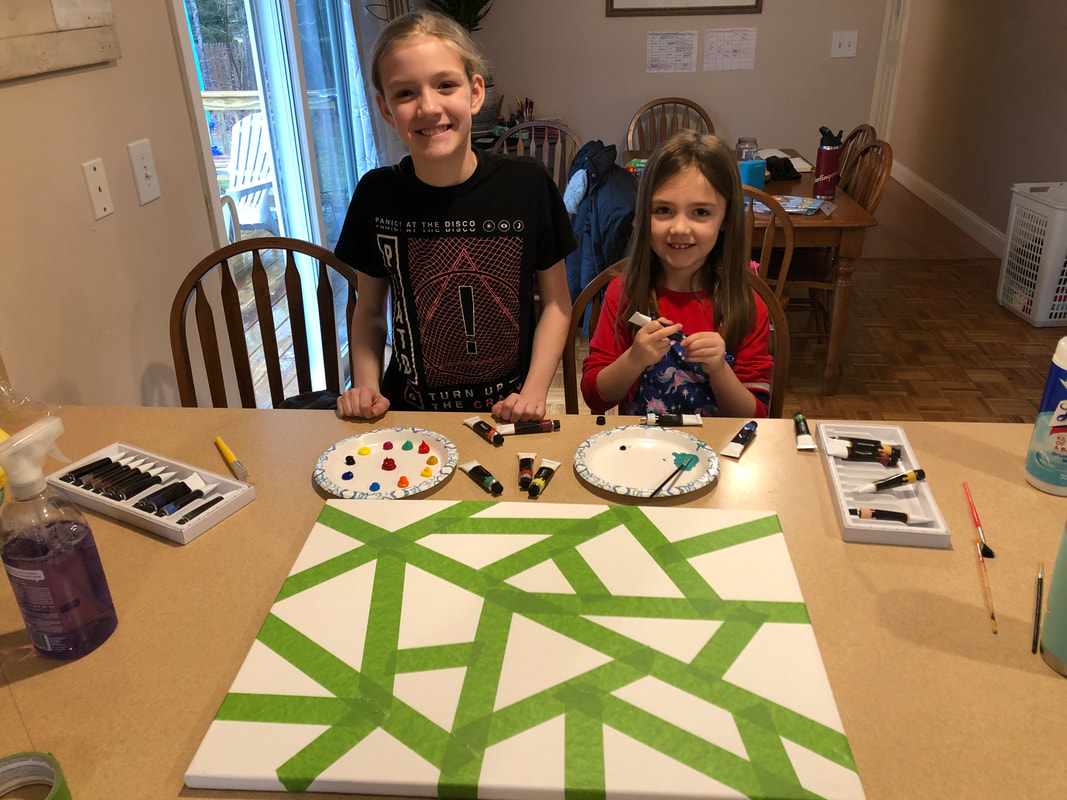
Starting with a blank canvas or piece of paper,
tape randomly all over the canvas so there are empty spots of white left to be painted.
The less tape you use the more you will have to paint.
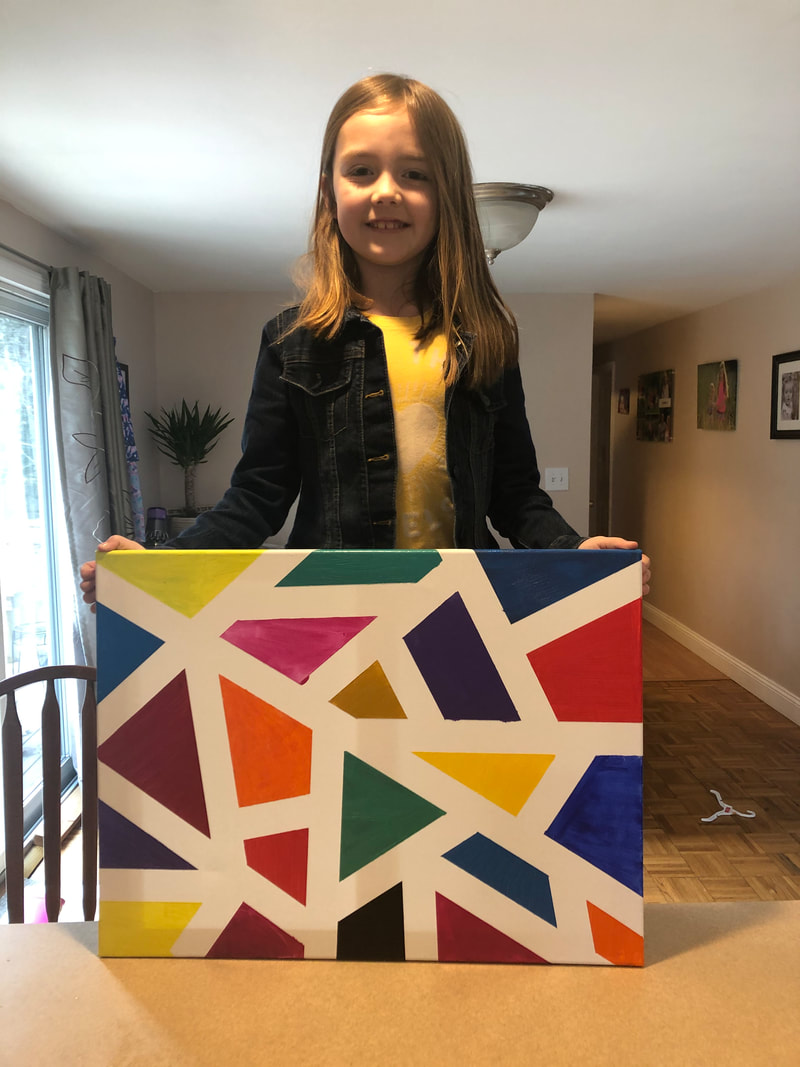
Have your child paint the canvas or paper with all different colors.
If they would like to keep one color in each white area that is great because then you can talk about the colors.
When the paint is all dry you may peel the tape off to reveal your masterpiece.

Activity Wrap Up:
Find somewhere in your home to hang the new art work or mail it to a friend or family.

How do I know what my child is learning? (Assessment)
Have your child tell you about what colors he/she is using. 
You can talk to them about how to hold a paint brush and use phrases like “gentle strokes” because sometimes children will push down very hard with the paint brush.

How can you extend this activity? (Modifications)
If you do not have a canvas you can use thick paper.
Also if you don't have painters tape you can use brown masking tape.
If you don't have acrylic paint try using any paint.
If you don't have any of these items your child can paint on different pieces of paper and when they dry you can cut them out to make a collage with all the colors.

Helpful Hints: (Pitfalls & Solutions)
If you are using paper because you don't have a canvas be careful the tape doesn't rip the paper.
Picture
Picture
Picture
Picture
0 Comments

Journal entry

4/10/2020

0 Comments

 
Overall Purpose:  To reflect on the week and all the activities that took place.

Theme:  Trees
LESSON
Learning Standard(s):
RI.K.7. With prompting and support, describe the relationship between illustrations and the text in which they appear (e.g., what person, place, thing, or idea in the text an illustration depicts).
RL.K.6. With prompting and support, explain that reading the cover or title page is how to find out who created a book; name the author and illustrator of a book and define the role of each in telling the story.
W.PK.2. Use a combination of dictating and drawing to supply information about a topic.
SL.PK.5. Create representations of experiences or stories (e.g., drawings, constructions with blocks or other materials, clay models) and explain them to others.

Behavioral Objectives/Learning Outcomes:
I would like the children to retain what they have learned that week. Keeping track of things in a journal is a great way to be able to look back and reflect. I would also love to see the journals when school resumes!

Motivational Techniques: (What will you use to pair with lesson (i.e. a book, song, video etc)
https://youtu.be/wTIyUKznXzk - I Like Myself read aloud

Procedures: (Step by Step how to do the activity)
Make a journal or use a notebook.
Have your child decorate the cover.
Explain to them that they are the author and illustrator of their own journal.
Talk to your child about the week and what their favorite lesson was.
Pick your favorite lesson from that week and draw a picture about it. 
Have your child tell you what he or she has drawn and write the words for them.
Make sure to date each journal entry!

Materials:
Loose paper you can clip together or a notebook
Drawing materials

Wrap-up: 
Talk to your child about what you enjoyed as well as ways you can change things or do things differently. 

Assessment:
  • encourage and acknowledge children as they identify challenges, take action, and reflect on their choices and decisions, adjust strategies, and plan next steps.
  • pursue personal interests in play and learning.

Modifications:
If your child really enjoys making the journal entry they can also do it each day after the lesson.

Pitfalls & Solutions
Make sure you keep the journal in a safe place that you can access each friday.

0 Comments

tree rubbing!

4/8/2020

0 Comments

 
Overall Purpose:  To become familiar with the trees that grow all around us. Also this is a great way to work on fine motor skills and coordination.
Theme:  Trees
LESSON
Learning Standard(s):
RI.PK. 7. With prompting and support, describe important details from an illustration or photograph.
RI.PK.10. Listen actively as an individual and as a member of a group to a variety of age-appropriate informational texts read aloud.

W.PK.2. Use a combination of dictating and drawing to supply information about a topic.

Behavioral Objectives/Learning Outcomes:
I would like the children to become more aware of the different types of trees in nature. Talking about the similarities and differences between the trees they find while on a nature walk as well as when they are done with their rubbings. 
This is also a great way to work on pincer grasp and other fine motor skills. 

Motivational Techniques: (What will you use to pair with lesson (i.e. a book, song, video etc)
https://youtu.be/AOXLOUszY2o - short video about trees
https://youtu.be/JBZUKKGEeNw - We Love Trees read aloud
https://youtu.be/7mt79JW9u18 - A song about trees
https://youtu.be/nO67Jd_6KEw - tree identifying video

Procedures: (Step by Step how to do the activity)
Go on a nature walk and look for different types of trees.
Help your child hold the paper up to the tree trunk and rub the crayon over the paper.
Continue to do this with different trees either on the same paper to make a collage or different papers.
Ask your child what color they are going to use for each rubbing.

Materials:
-Paper
-crayons with the paper peeled off

Wrap-up: 
Can you identify any of the trees you discovered on your walk?
Talk about what you saw and how each rubbing looks the same and different.

Assessment:
  • experiment with a single material/medium on multiple surfaces, try many materials on the same surface to discover the different ways materials can be used to produce a variety of effects, the advantages or disadvantages of each for specific purposes, and revisit materials to build on past experiences. 


Modifications:
If you are having a hard time holding the paper on the tree you can try using tape and taping all the sides of the paper.
If you can't get outside you can always bring in pieces of bark or leaves and do this project inside.

Helpful Hints:
The paper may rip. You might want to use thicker paper or make sure to go slow and not apply too much pressure to the crayon.

​
0 Comments

Leaf person!

4/8/2020

0 Comments

 
Lesson/Activity Name:  Leaf Person
Overall Purpose:  To create something special while talking about your feelings.
Theme:  Trees
LESSON
Learning Standard(s):
SEL7: The child will demonstrate the ability to communicate with others in a variety of ways.
SEL2: The child will demonstrate accurate self-perception.
SEL1: The child will be able to recognize, identify, and express his/her emotions.

Behavioral Objectives/Learning Outcomes:
  • create social stories describing how someone might feel when… (e.g., exclusion, hitting, etc.).
  • discuss actions or behaviors that make them feel comforted (e.g., “It makes me feel better when…”).

. 
Motivational Techniques: (What will you use to pair with lesson (i.e. a book, song, video etc)
https://youtu.be/-J7HcVLsCrY - The Feeling Song
https://youtu.be/PWujGPb6mgo The Color Monster A story about emotions

Procedures: (Step by Step how to do the activity)
Go on a nature walk either in your own yard or one of your favorite trails.
Collect different leaves and anything else from nature you may want for your leaf person.

Materials:
Construction paper
Liquid glue
Leaves
coloring utensils

Wrap-up: 
Talk to your child about their feelings.

Assessment:
  • engage in meaningful communication or conversations with program staff (including home language or alternative communication systems as needed).

Modifications:
If you are not able to go on a walk or collect leaves you can cut leaves out of paper or draw them.

Pitfalls & Solutions
Sometimes talking about feelings can be tough. You can also make your own picture and talk about your feelings which will help ease your child into doing the same.

​
0 Comments

tuesday, April 7

4/7/2020

0 Comments

 
Overall Purpose:  To become better acquainted with different letters and shapes.
Theme:  Trees
LESSON
Learning Standard(s):
SEL3: The child will demonstrate self-efficacy (confidence/competence).

F.K. 1. Demonstrate understanding of the organization and basic features of print.
d. Recognize and name all upper- and lowercase letters of the alphabet.

Behavioral Objectives/Learning Outcomes:
I would like the children to become confident in letter and shape making. Making straight lines does not come easy to a child this will give them confidence and they will be able to see the letter and shape come together with the sticks.

Motivational Techniques: (What will you use to pair with lesson (i.e. a book, song, video etc)
https://youtu.be/abVvZLyZAIg - Short lesson about trees
https://youtu.be/XFQZfeHq9wo - The Giving Tree read aloud
https://youtu.be/vineOu-TOl4 - The Mixed Up Letters read aloud

Procedures: (Step by Step how to do the activity)
Start off by going on a nature walk.
Collect different size small sticks in a small reusable tote.
Work with your child to make different letters and shapes with the sticks.
Glue the sticks to paper in the shapes you prefer.

Materials:
Paper
Liquid glue
small assorted sticks
small tote to carry the sticks

Wrap-up: 
Talk about the letters you have made together. What sounds do they make?
When the glue has dried have your child trace the letters and shapes with their finger.
Then you can try making the letters with a pencil or crayons.
Remember to always start your letters at the top!
Count how many sticks one letter or shape needs.

Assessment:
  • use found materials to create collages (e.g., feathers, buttons, fabric, recycled materials).
  • explore ways to use or combine different types of lines to create shapes, letters, drawings.

Modifications:
If you do not have paper or glue or would like to stay in nature and make different shapes and letters on the ground that is fun too!

Helpful Hints: 
If the sticks are too bumpy they may not stick well to the paper. You can always just make the shapes and letters with the sticks and just not glue them onto paper. You can even keep a bin filled with small sticks that you can pull out and make different letters and shapes at a later date.

0 Comments

monday, April 6th

4/5/2020

0 Comments

 
Date: 4-6-20
Lesson/Activity Name:  KWL chart
Overall Purpose:  To become familiar and engaged in the lessons that will take place that week.
  • model a sense of wonder about the world (e.g., "I wonder...?" "How could that work?" “What do you think about...?").
  • help children to formulate questions and plan in-depth investigations on topics of their own interest. 
  • engage children in figuring out where to go for answers to their questions.
  • provide hands-on experiences that motivate children to apply skills and prior knowledge. 
  • provide opportunities for children to explain their thinking and receive feedback about how they reached a decision or created an object or project.
Theme:  Trees
LESSON
Learning Standard(s):
APL 2: The child will demonstrate eagerness and curiosity as a learner.

Behavioral Objectives/Learning Outcomes:
  • use a K-W-L strategy to personally connect/engage with topics: K - what they already know (or think they know), W – what they want to know (or are curious about), and L – what they learned during or following their study.
  • Start with the question: 

. 
Motivational Techniques: (What will you use to pair with lesson (i.e. a book, song, video etc)
https://youtu.be/nO67Jd_6KEw - tree identifying video
https://youtu.be/AOXLOUszY2o - short video about trees
https://youtu.be/3VNRlUCFMKc - A Tree is a Plant book

Procedures: (Step by Step how to do the activity)
Take a look at all the lessons that will take place that week.
  • Tree rubbing
  • Leaf person
  • Stick letters
Talk with your child about what your week will look like and what you have planned for learning that week.
You can write down the word “Tree” in big letters and ask your child what they already know or (think they know) W – what they want to know (or are curious about), and L – what they learned during or following their study. 
Take a look at the videos and look up some of your own about nature and trees.

Materials:
Large piece of paper
markers

Activity Wrap-up: 
The wrap up to this may come at the end of the week after you have explored nature and all the trees Cape Cod has to offer. This is when the “L” will come in. You will then be able to discuss with your child what you both have learned from this week.

What is my child learning? (Assessment):
  • model a sense of wonder about the world (e.g., "I wonder...?" "How could that work?" “What do you think about...?").
  • help children to formulate questions and plan in-depth investigations on topics of their own interest. 
  • engage children in figuring out where to go for answers to their questions.
  • provide hands-on experiences that motivate children to apply skills and prior knowledge. 
  • provide opportunities for children to explain their thinking and receive feedback about how they reached a decision or created an object or project.

How can you extend this activity? Modifications:
If you do not have a large poster board or large construction paper you can tape paper together or just make a small KWL chart.
Helpful Hints: 
If your child doesn't seem interested in this part of the lesson for the week you can guide them by writing down what you think you know and what you would like to learn. This will make them more eager to help you find these answers and they will want to talk about what they have learned.

0 Comments
Forward>>

    Author

    Ms. Amanda - Preschool 
    Assistant Preschool Director 

    Archives

    June 2020
    May 2020
    April 2020
    March 2020

    Categories

    All

    RSS Feed

Powered by Create your own unique website with customizable templates.