WELCOME THE LAUREL SCHOOL TODDLER, PRESCHOOL & PRE-KINDERGARTEN VIRTUAL CLASSROOMS
  • Welcome
  • Toddler
    • Ms. Naomi & Ms. Haley
    • Ms. Margo & Ms. Tonia
  • Preschool
    • Ms. Rachel
    • Ms. Julia
    • Ms. Taisha
    • Ms. Amanda
    • You Tube Stories & Songs
  • Pre-Kindergarten
    • Ms. Lynn
    • Ms. Nancy
  • Ms. Sunny's Corner
  • Student & Family Shares!
  • Contact

Ms. Rachel's 
home Learning resources


sink or float?

5/29/2020

0 Comments

 
What is our theme? 
Sink or float

What is the lesson (overall purpose)?  
Students will predict and explore whether certain objects sink or float.

MA Guidelines/Standards:
APL 2: The child will demonstrate eagerness and curiosity as a learner.
APL3: The child will be able to maintain focus and attention, and persist in efforts to complete a task.
PreK-PS1-2 (MA). Investigate natural and human-made objects to describe, compare, sort and classify objects based on observable physical characteristics, uses, and whether something is manufactured or occurs in nature.
 
Learning Outcomes:
Students will have a better understanding of what objects may sink or float.

Songs, Books & Videos (Motivational Techniques)
“Sink or Float?” Youtube Science:
https://www.youtube.com/watch?v=eQuW8G2QV_Q
 
Materials 
- Device to watch youtube link
- Large tub, bucket or large/wide pot
- Items for child to experiment with

Activity (Procedure):
-Start by watching the youtube link to introduce your child to sinking items and floating items. This video talks more into the details of WHY this happens.
- Tell your child they will conduct their own experiment of sink or float.
- Either collect items to use together or have the items ready to go for your child.
- Predict whether an item will sink or float BEFORE placing it into water.

Activity Wrap Up: 
- Review what items sank or what items float.  Review how some items have a higher density than others. This is why they sink or float.
 
How do I know what my child is learning? (Assessment)
-Is my child engaged with this activity?
- Does my child understand what items may sink or float?
 
How can you extend this activity? (Modifications)
- Keep experimenting with new objects!

Helpful Hints: (Pitfalls & Solutions)
- Child may not fully grasp the understanding that some items have a higher density, that’s okay. What is more important to me at this point is that your child is interested in participating in the activity.


0 Comments

patterns!

5/28/2020

0 Comments

 
What is our theme? 
Patterns

What is the lesson (overall purpose)?  
Students will learn more about what patterns are and be given the opportunity to create their own pattern. 

MA Guidelines/Standards:
APL 2: The child will demonstrate eagerness and curiosity as a learner.
APL3: The child will be able to maintain focus and attention, and persist in efforts to complete a task.
APL4: The child will demonstrate creativity in thinking and use of materials.

Learning Outcomes:
- Students will be able to complete a pattern.
-Students will create their own pattern.


Songs, Books & Videos (Motivational Techniques)

“Pattern Fish” by Trudy Harris Read Aloud: 
https://www.youtube.com/watch?v=7_mqVCewsYA

Materials 
- Paper
- Crayons/markers
Activity (Procedure):


- Begin by watching the “Pattern Fish” book read aloud. Watch twice.
- Watch to see if your child is completing the patterns that are happening in the book read aloud.
- Using a marker, draw a simple fish outline on paper.
- Ask your child to create a pattern on the fish.

Activity Wrap Up: 
- Review what pattern is drawn on their fish.
-
How do I know what my child is learning? (Assessment)
- Does my child finish the patterns during the book read aloud?
- Can my child create their own pattern?


How can you extend this activity? (Modifications)
- Make more fish, more patterns, more fun!

Helpful Hints: (Pitfalls & Solutions)
- If your child is struggling to think of their own pattern, start a pattern for them and ask them to finish it.

​
0 Comments

rocking math!

5/27/2020

0 Comments

 
What is our theme? 
Math, Word problems 

What is the lesson (overall purpose)?  
- Students will use concrete objects to practice addition and subtraction word problems.
MA Guidelines/Standards:

APL 2: The child will demonstrate eagerness and curiosity as a learner.
PK.OA.1. Use concrete objects to model real-world addition (putting together) and subtraction (taking away) problems up through five.


Learning Outcomes:
- Students will use concrete objects to practice addition and subtraction word problems.


Materials 
- 5 small rocks
Activity (Procedure):

- Ask your child to go and gather 5 small rocks. (Or have rocks ready for your child to use)
- When they return with rocks, ask your child to arrange them on a surface in front of them. Allow them to have a moment to prepare their rocks.
- Ask your child what their favorite animal is. Whatever their answer is, tell them that the rocks just became five __of their favorite animal __ ! For example if their favorite animal is a bird, then tell your child they now have five birds in front of them.
- Give them addition/subtraction “what if” scenarios. Ask them to see how many rocks (birds/animals) they have now?
Example scenarios: 
“Okay, so here we have five birds sitting on a tree branch enjoying the sun when GASP one just flew away!” Allow child to take one rock away. “How many birds are left on the branch?”  “What if two more birds flew away?” “What if one bird flew back to the branch?”
OR 
“Lets pretend two of your birds are here on a tree branch, but three are here eating from the bird feeder.” Allow time for set up, “What if the three birds from the feeder joined the two birds sitting on the branch? How many birds are on the tree branch now?
Etc. etc. Get fun with it! 
Activity Wrap Up: 

Count up how many rocks you have, “one, two, three, four, five.”
Now countdown, “Five, four, three, two one.”
There are five rocks in total.
How do I know what my child is learning? (Assessment)
- Is my child able to identify the total after adding or removing a specified number of objects up through five?
- Is my child able to count forward or backward from a given number through five?
- Is my child expressing interest in solving these math word problems? 

How can you extend this activity? (Modifications)

Use ten objects instead of five!
Helpful Hints: (Pitfalls & Solutions)


​
0 Comments

beginning sounds...

5/26/2020

0 Comments

 
What is our theme? 
Phonics- beginning sounds

What is the lesson (overall purpose)?  
Children will practice focusing on the beginning sound of words. 

MA Guidelines/Standards:
APL 2: The child will demonstrate eagerness and curiosity as a learner.
F.PK.3. Demonstrate beginning understanding of phonics and word analysis skills.


Learning Outcomes:
- Students will identify the beginning sound of various words.
Songs, Books & Videos (Motivational Techniques)

“The Beginning Sounds Chant” Youtube song link:
https://www.youtube.com/watch?v=mxr7078NMqo

Materials 
- Device to play youtube song 
-  Sound Picture Strips
- OPTIONAL: ABC (magnets) letters OR individually written out on paper  


Activity (Procedure):
-Start by listening to the youtube song 
- Look through picture strips together. Say what each picture is. Put extra emphasis on that first letter sound when you say the word. For example: SUN you would say: “SsssSun”  or BALL you would say “BbbbbBall.”
- After you say it a few times, ask your child “What does sun start with?” wait for the “Sssss” sound. “What does ball start with?” wait for the “bbb” sound. 
-Review as many images as you can both stand while following these steps. 
- If you can, include an example of the written/magnetic letter that pairs with the sound. For example the “S” for sun.  Show your child the correlating letter and say “S makes the sound ssss.” 

Activity Wrap Up: 
Give your child a “quiz!” Point to a random picture(s), ask your child to say the name of the picture, and then to tell you the sound that word starts with?  

How do I know what my child is learning? (Assessment)
- Is my child able to identify the beginning sound of words?
- Does my child know what letter makes that sound?
- How many words did you get through before your child was over the activity?
​

How can you extend this activity? (Modifications)
Show your child individual letters and ask them what sound that letter makes. 

Helpful Hints: (Pitfalls & Solutions)
Confidence is so important for success when it comes to learning. If your child cannot tell you the beginning sound of words, no worries, this isn’t easy! Tell them! Make sure there is a relaxed, no pressure environment. Go back to the images they struggled with a few times and make a big deal when they get it without any help. 

​
tues_may_26_beginning_sound_activity_strips_copy.pdf
File Size: 30123 kb
File Type: pdf
Download File

0 Comments

Moon, Art

5/21/2020

0 Comments

 
What is our theme? 
Moon, Art

What is the lesson (overall purpose)?  
Student will practice fine motor skills and creativity while learning and talking more about the moon

MA Guidelines/Standards:
APL 1: The child will demonstrate initiative, self-direction, and independence.
PreK-ESS1-1 (MA). Demonstrate awareness that the moon can be seen in the daytime and at night, and of the different apparent shapes of the moon over a month. 
PreK-LS1-3 (MA). Use their five senses in their exploration and play to gather information.

Songs, Books & Videos (Motivational Techniques)
- “Papa Please Get the Moon for Me” by Eric Carle read aloud:
           https://www.youtube.com/watch?v=sGqAw7UM6qo

- Gentle music for background while working on art.


Materials 
- Black or blue paper (or painted/drawn background) *night sky paper*
- Tinfoil 
- Sharpie marker (to draw moon circle on foil)
- Child friendly scissors
- Glue stick
- Blue/grey/black/white paint (optional)
- Star stickers/cutouts (optional)

Activity (Procedure):
- Start by watching the Eric Carle book read aloud link.
- Start gentle music and get your child set up at a table with materials.
- Use another sheet of tinfoil to crinkle into a flattened ball of foil: it will be used as a “moon paint brush.”
- Have your child dip foil ball into a mixture of moon colored paints and onto sheet of foil with the drawn moon circle. Allow some time to dry. 
- Ask your child to work on SAFELY cutting the foil circle moon out.
- Encourage your child to gently crinkle their tin foil to make the moon craters. ~Sensory ~
- Flat out the moon a bit so that your child can glue it onto his/her night sky paper. 
-Add stars using stickers or white paint.


Activity Wrap Up: 
Hang artwork up and admire. Talk about the things you can see in the night sky. 

How do I know what my child is learning? (Assessment)
 - Talk to your child about the moon and the night sky while they are working. Do they know the moon can be seen both at night and sometimes during the day? Do they understand the moon’s shape changes each night?
- Is my child taking interest and initiative when working on his/her artwork?
- Is my child interested in exploring the sensory element of tinfoil?

How can you extend this activity? (Modifications)
Can you make tin foil moons portraying all the phases of the moon? 


​
thurs_may_21_images.docx
File Size: 293 kb
File Type: docx
Download File

0 Comments

Moon phases, Science

5/20/2020

0 Comments

 
What is our theme? 
Moon phases, Science

What is the lesson (overall purpose)?  
*Note: This lesson would be best done taken place over the course of a full month*
Students will be given an opportunity to observe and record the moon phases.

MA Guidelines/Standards:
APL 2: The child will demonstrate eagerness and curiosity as a learner.
PreK-ESS1-1 (MA). Demonstrate awareness that the moon can be seen in the daytime and at night, and of the different apparent shapes of the moon over a month. 

Clarification Statement: The names of moon phases or sequencing moon phases are not expected.

Learning Outcomes:
- Students will recognize that the moon can be seen both in the daytime and at night. 
- Students will recognize and document the different shapes the moon takes. 

Songs, Books & Videos (Motivational Techniques)
“Watching the Moon” by  Edana Eckart book read aloud: 
https://www.youtube.com/watch?v=YeETiPF7B5M

(watch this a few times in one sitting or over time!)

Materials 

- Moon phase calendars  (see attachment)
- Marker/pen/pencil

Activity (Procedure):
- Start by watching the youtube book read link.
- Tell your child they’re going to be a ”scientist” taking observations on what the moon looks like each night (if you can) for the next few weeks.  
- Make sure to view the moon, when visible, when the sun is out and in the evening when it’s dark. 
-Have your child record their observations of the moon on the blank moon phase calendars provided (or make your own).
- Discuss how the moon shape changes (full circle, half circle, and crescent) through drawings, paintings, collage, however!
- Observe and identify the differences between night and day based on what they see in the sky.

Activity Wrap Up: 
Watch and discuss how the moon is changing as your child is observing and record throughout the month. 
At the end of the month, reflect on your child’s artwork recordings and discus what happened with the moon.
Were there any differences with the daytime moon and the nighttime moon?
​

How do I know what my child is learning? (Assessment)
Does my child express or demonstrate awareness of changing shapes of the moon as it waxes and wanes each month, through language or representation

How can you extend this activity? (Modifications)
  • Encourage children to retell stories about night and day and things in the sky (e.g., Happy Birthday Moon, Moongame, and Mooncake by Frank Asch, Papa Please Get the Moon for Me by Eric Carle), as well as informational books about the moon, (e.g., I See the Moon by Jacqueline Mitton; One Small Square: The Night Sky by Donald M. Silver; What the Sun Sees/What the Moon Sees by Nancy Tafuri, Watching the Moon by Edana Eckart; and Why Does the Moon Change Shape? by Melissa Stewart). 
  • Display pictures of space with sun, moon, and stars, and illustrations of phases of the moon.


wed_may_20_moon_phase_calendars.docx
File Size: 522 kb
File Type: docx
Download File

0 Comments

shape scavenger hunt!

5/19/2020

0 Comments

 
What is our theme? 
Shapes, Math

What is the lesson (overall purpose)?  
Students will go on a shape scavenger hunt to find objects that are specific shapes. 

MA Guidelines/Standards:
APL 2: The child will demonstrate eagerness and curiosity as a learner.
PK.G.2. Identify various two-dimensional shapes using appropriate language.

Learning Outcomes:
- Students will recognize various shapes in their surroundings. 
- Student will show eagerness and confidence when finding shapes.


Songs, Books & Videos (Motivational Techniques)
“Shapes Song for Children” Youtube link
https://www.youtube.com/watch?v=AnoNb2OMQ6s

Materials 
- Shape Hunt Check List
- Marker
- Bag to collect items

Activity (Procedure):
- Start by watching the “Shapes Song”
- Show them their scavenger hunt checklist sheet. Review the shape names. 
- Tell them they are going on a shape hunt! Hand them their checklist, a marker and their bag. Show them how to cross of a shape on their checklist after it’s found. 
- Ask them to come back only when they’re done!

Activity Wrap Up: 
- Go through their bag of treasures with your child. Ask them to tell you what shapes they found.
-Review the shape names on their checklist one last time.

How do I know what my child is learning? (Assessment)
- Is my child interested in finding shapes around their home?
- Does my child know the shape names?
- What shapes is my child struggling with?


How can you extend this activity? (Modifications)
- Find more challenging shapes: Diamond, octagon, hexagon, and rhombus

Helpful Hints: (Pitfalls & Solutions)

If your child is forgetting the name of a shape, you can help them by starting to say the first sounds of the shape name and allowing them to finish it. For example: If your child is forgetting the shape name “triangle” you could help by saying ‘triiii….” And see if they can finish it! 

Point out the differences on each shape. Point out the number of sides each shape has, the number of corners, the differences in length or width, etc. These detailed reviews will help build their knowledge of their shape and possibly help them remember the shape in the future more easily. 

​
tues_5_19_shape_hunt_checklist.docx
File Size: 141 kb
File Type: docx
Download File

0 Comments

science: Liquid and Solids, Heat and Cold

5/18/2020

0 Comments

 
What is our theme? 
Liquid and Solids, Heat and Cold

What is the lesson (overall purpose)?  
Students will experiment and explore what happens to certain objects when placed in the heat (sun) or in the cold (freezer). 

MA Guidelines/Standards:
APL 2: The child will demonstrate eagerness and curiosity as a learner.    
PreK-PS1-1 (MA). Raise questions and investigate the differences between liquids and solids and develop awareness that a liquid can become a solid and vice versa.
PreK-PS1-4 (MA). Recognize through investigation that physical objects and materials can change under different circumstances. 


Learning Outcomes:
- Students will understand that liquid can become a solid, and that at times a solid can become a liquid.
- Students will understand that temperature (heat and cold) can have a role in the changes of these objects.

Songs, Books & Videos (Motivational Techniques)
“Solids and Liquids for Kids” Youtube link:
https://www.youtube.com/watch?v=nbfloBQnpK8

Materials 
- Ice cube tray
- 2 cups
- 2 icecubes
- Water
- Juice
- Piece of chocolate
- Piece of fruit
- Piece of bread/cracker

Activity (Procedure):
- Begin by watching the youtube link to review solids versus liquid objects. 
- Show them the materials that will be used during your experiment. Ask your child if each item is a solid or a liquid.
- Now ask your child what they think will happen to each item when placed in the cold?  What about in the heat? 
- Water and juice can be poured into ice tray for freezer, and then into cups for outside. One ice cube will go outside the other will go back to the freezer. 
- Place half of each other object out in the sun, and the other half in the freezer. 
- Go back in a few hours to check and review what’s happened to each item.


Activity Wrap Up: 
- Talk about what happened to the items in the sun. What happened to the items in the freezer? (emphasize words freeze/froze and melt)
- Review the difference between liquid objects and solid objects.
- Review how liquid objects can be turned into solids and (sometimes) solids into liquids.

How do I know what my child is learning? (Assessment)
- Does my child identify liquid objects and solid objects? 
- Does my child use appropriate terms to describe how and why materials can change? (e.g. water can freeze, chocolate can melt)

How can you extend this activity? (Modifications)

- organize learning opportunities for children to explore ways materials can be changed by freezing/melting, dissolving (e.g., sugar crystals or gelatin in water), and combining materials (e.g., earth + water = mud).

- Create a sensory table with liquids and solids. Remind children how liquid takes the shape of the container it is in and solids have their own shape. Include different cups and pouring tools.

Helpful Hints: (Pitfalls & Solutions)
Review review review! 

​
0 Comments

sun, light & shadows

5/15/2020

0 Comments

 
What is our theme? 
The sun, light and shadow

What is the lesson (overall purpose)?  
Note: *This lesson takes place over the course of a full day.*
Students will be given an opportunity to make observations on how the sun moves during the day. Students will also explore the relationship between light and shadow.

MA Guidelines/Standards:
APL 2: The child will demonstrate eagerness and curiosity as a learner.
PreK-ESS1-2 (MA). Observe and use evidence to describe that the sun is in different places in the sky during the day.
PreK-PS4-2 (MA). Connect daily experience and investigations to demonstrate the relationships between the size and shape of shadows, the objects creating the shadow, and the light source. 


Learning Outcomes:
- Students will understand that the sun moves in the sky throughout the day. 
- Students will provide evidence of the relationship between the sun, the time of day, the object, and their shadow.
- Students will demonstrate curiosity and initiative.  

Songs, Books & Videos (Motivational Techniques)
“Shadows-The Dr. Bincos Show” – Education youtube video https://www.youtube.com/watch?v=lOIGOT88Aqc

Materials 
- Chalk 
- A consistently sunny spot outside to use chalk 

Activity (Procedure):
Start this activity in the early/mid morning:
- Begin by watching the “Shadows” educational youtube link.

- Ask your child what they know about shadows.  Review what there needs to be to have a shadow (light and object).
- Go outside, have chalk nearby. Ask your child if they see any shadows on the ground? A shadow from a tree, a chair, the car, or maybe they’ll find their own shadow! (If they don’t, point it out!)
- Now ask them where the light is coming from? (The sun of course!)
- Tell them you are going to trace their shadow on the ground (use the chalk!).  Make sure to circle their feet before tracing their shadow. 
- Explain how during the day the sun will be moving in the sky. Tell them you will come back later to see if their shadow moves too. 
Early afternoon
- Go back to the circled feet and have your child stand in place. Trace their shadow. Has it moved?
Late afternoon
- Repeat the last step. 

Activity Wrap Up: 
Look at the different shadow tracings. What’s different? What’s the same? What happened?

How do I know what my child is learning? (Assessment)
- Is my child engaged in this activity?
- Does my child know what is needed to create a shadow?
- Do they notice that their shadow has moved? 

- Do they understand why and how their shadow moved?

How can you extend this activity? (Modifications)
Trace shadows of different objects during the day!

Helpful Hints: (Pitfalls & Solutions)
This is a hard concept to grasp sometimes for kids, review review review.

​
0 Comments

light & shadow

5/14/2020

0 Comments

 
What is our theme? 
Light and Shadow

What is the lesson (overall purpose)?  
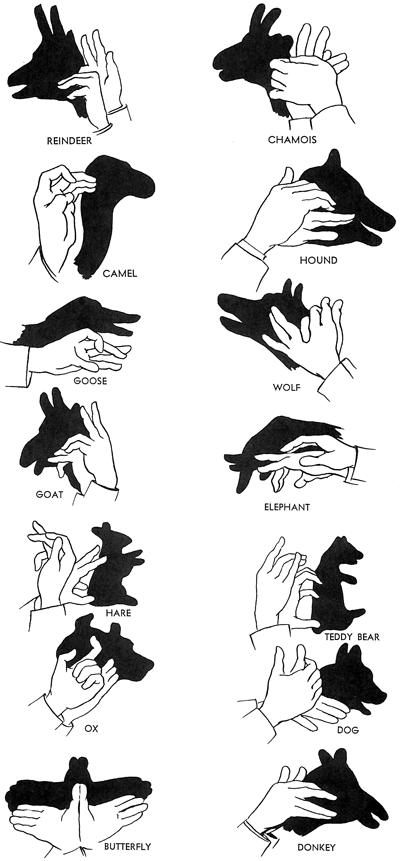
Students will use simple hand puppets to experience and play with light and shadow.

MA Guidelines/Standards:
APL 2: The child will demonstrate eagerness and curiosity as a learner.

PreK-PS4-2 (MA). Connect daily experience and investigations to demonstrate the relationships between the size and shape of shadows, the objects creating the shadow, and the light source. 

Learning Outcomes:
- Student will explore and play with the relationship between light and shadow. 
- Student will investigate the difference in size when closer to light source versus farther away. 
 

Songs, Books & Videos (Motivational Techniques)
“Shadows-The Dr. Bincos Show” – kid friendly educational science youtube link https://www.youtube.com/watch?v=lOIGOT88Aqc
The 3 Little Pigs-Shadow Puppet short filmhttps://www.youtube.com/watch?v=iCmFWJjc4RA
​

Materials 
- A light source (example: flashlight, bendy/gooseneck lamp)
- Your hands!

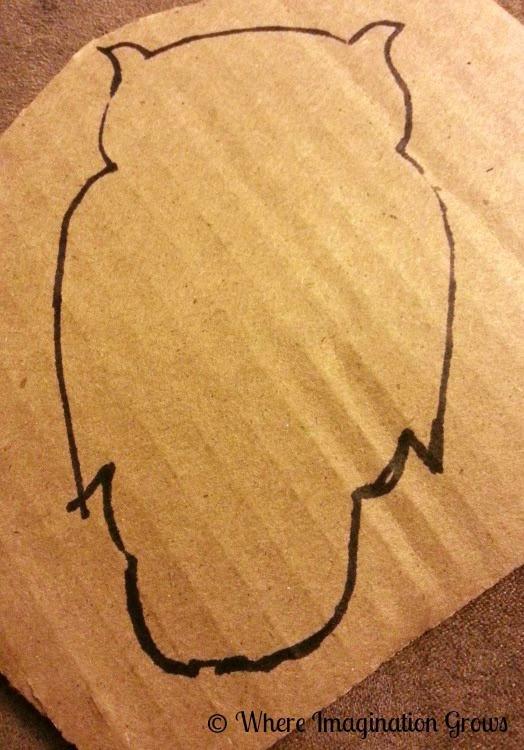
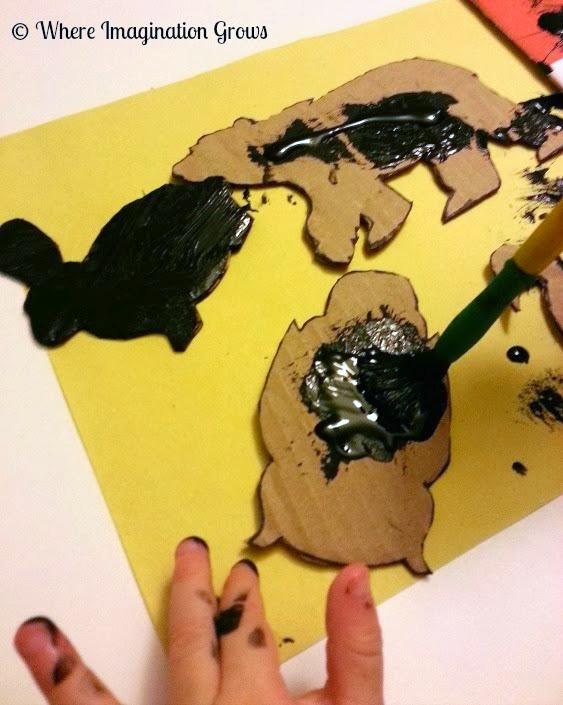
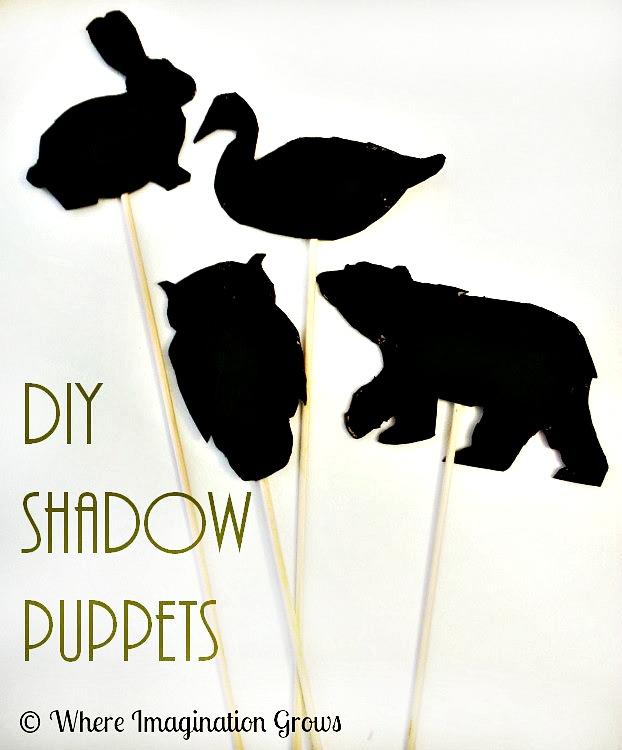
(Optional) Shadow Puppet Materials:
  • Cardboard (or a heavier card stock paper)
  • Kebab Skewers or wooden dowels
  • Black Paint
  • Scissors
  • Tape (packaging or duct tape work best)

Activity (Procedure):

- Start by watching the “Shadows” science youtube link. Talk about what they learned.
- Explain to them how you can create your own show or play using shadow puppets! Explain how you will need a light source and that it would be helpful to be in a dark room. Create the space together.
- Show them various ways to make hand shadow shapes. Allow for time to play and create their own story.
- Allow them to play and create a story using shadow puppets (if you decide to make some!).


Activity Wrap Up: 

- Discuss what you need to have in order to find shadows (Light and object).
- Discuss what happens when you’re closer to the light source versus farther from the light source.
How do I know what my child is learning? (Assessment)
 
-Does my child know what is needed to have shadows? 
- Does my child play with the differences of being closer to or farther from the light?
- Is my child interested and curious to explore the relationship between light and shadow?

How can you extend this activity? (Modifications)

Can you do this in different rooms? On the ceiling? Outside? In the morning versus at night?
Helpful Hints: (Pitfalls & Solutions)


​
Picture
Picture
Picture
Picture
0 Comments
<<Previous

    Author

    Ms. Rachel 
    ​Preschool Teacher 

    Archives

    June 2020
    May 2020
    April 2020
    March 2020

    Categories

    All

    RSS Feed

Powered by Create your own unique website with customizable templates.